Visit the academy
Showroom
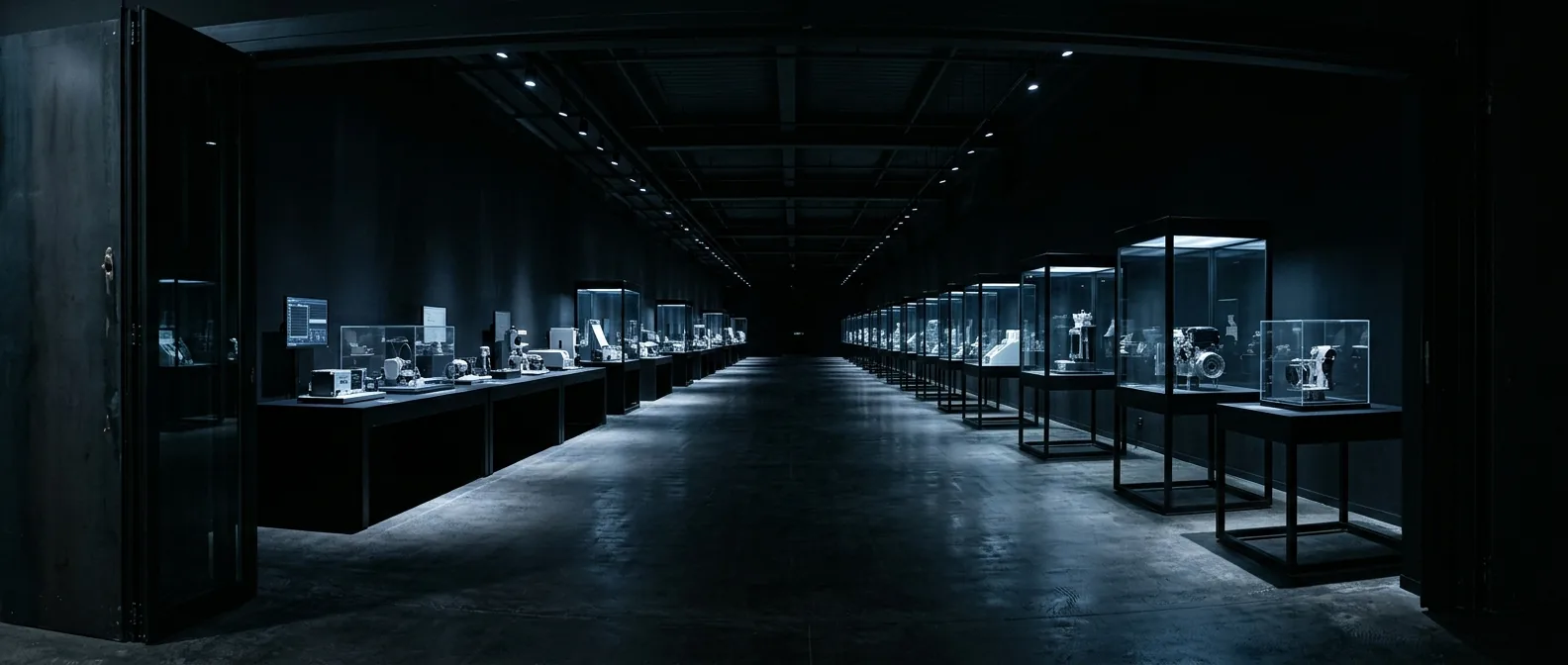
A physics academy oriented towards production must show three things: the raw material, what physics makes of it, and what industry can buy.
Every exhibit occupies a position in the same chain. A visitor following the route sees a raw ore become a functional material, then a measurement, then a product an industrial buyer can order.
The chain on display
- 01
Ore
Identified deposit, provenance and assay
- 02
Material
Laboratory synthesis: powder, pellet, film
- 03
Measurement
Diffractogram, transport curve, ageing test
- 04
Product
Demonstrator, standard, industrial prototype
11 of the 24 exhibits are hands-on or running
01
Raw materials and ores
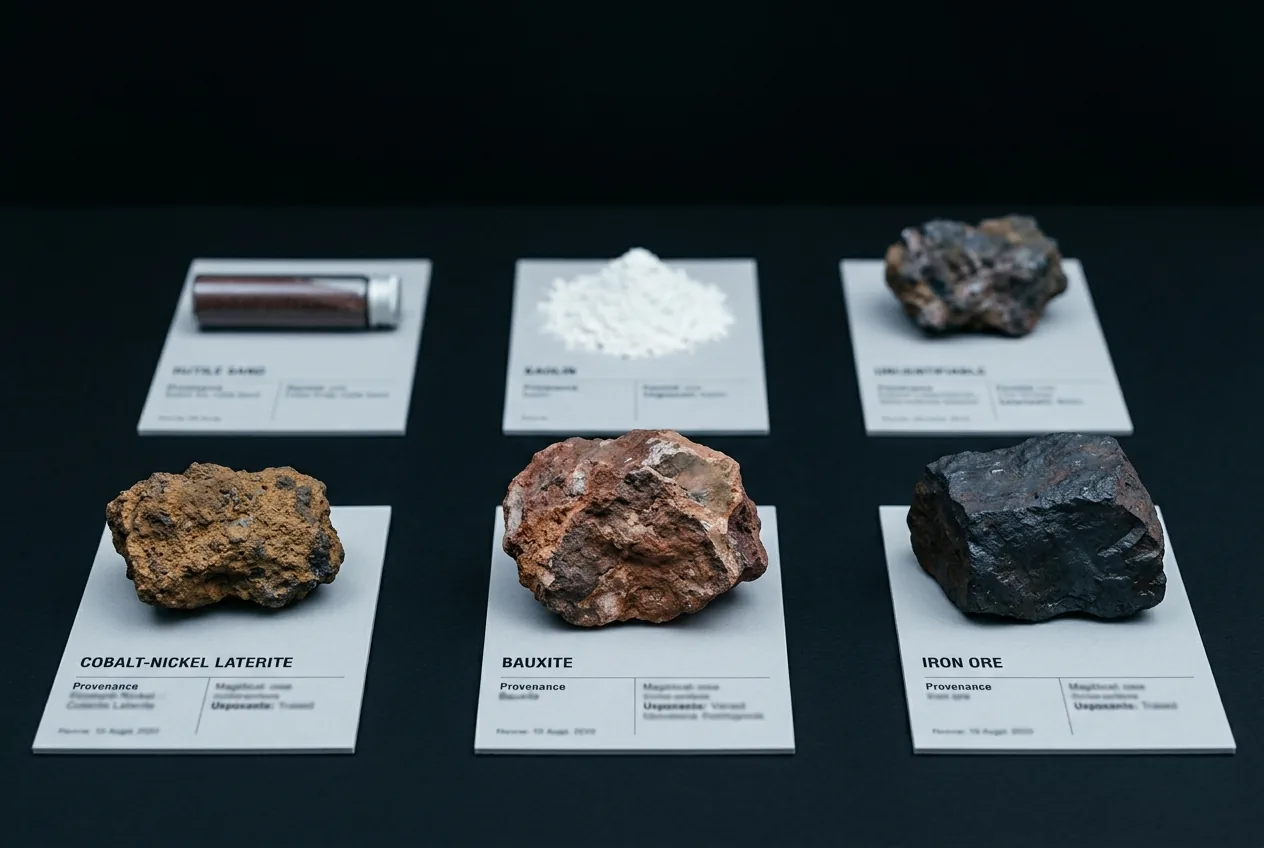
The starting point: the deposits and agricultural streams our research areas start from, with provenance and assay on display.
Labelled geological samples
Nkamouna cobalt-nickel, Minim-Martap bauxite, Mbalam iron, Akonolinga rutile, Kribi sands, western clays and kaolins. Each sample carries its provenance and elemental assay.
Agricultural residue biomass
Cocoa husks, rice hulls, palm fibre, sawdust, displayed with their lower heating value, moisture content and proximate composition.
Wall map of resources
For each deposit, the functional material the academy derives from it: bauxite → alumina and ceramics, clays → varistors and dielectrics, iron → soft magnetic cores, rutile → titanium oxides.
02
Functional materials produced in the laboratory
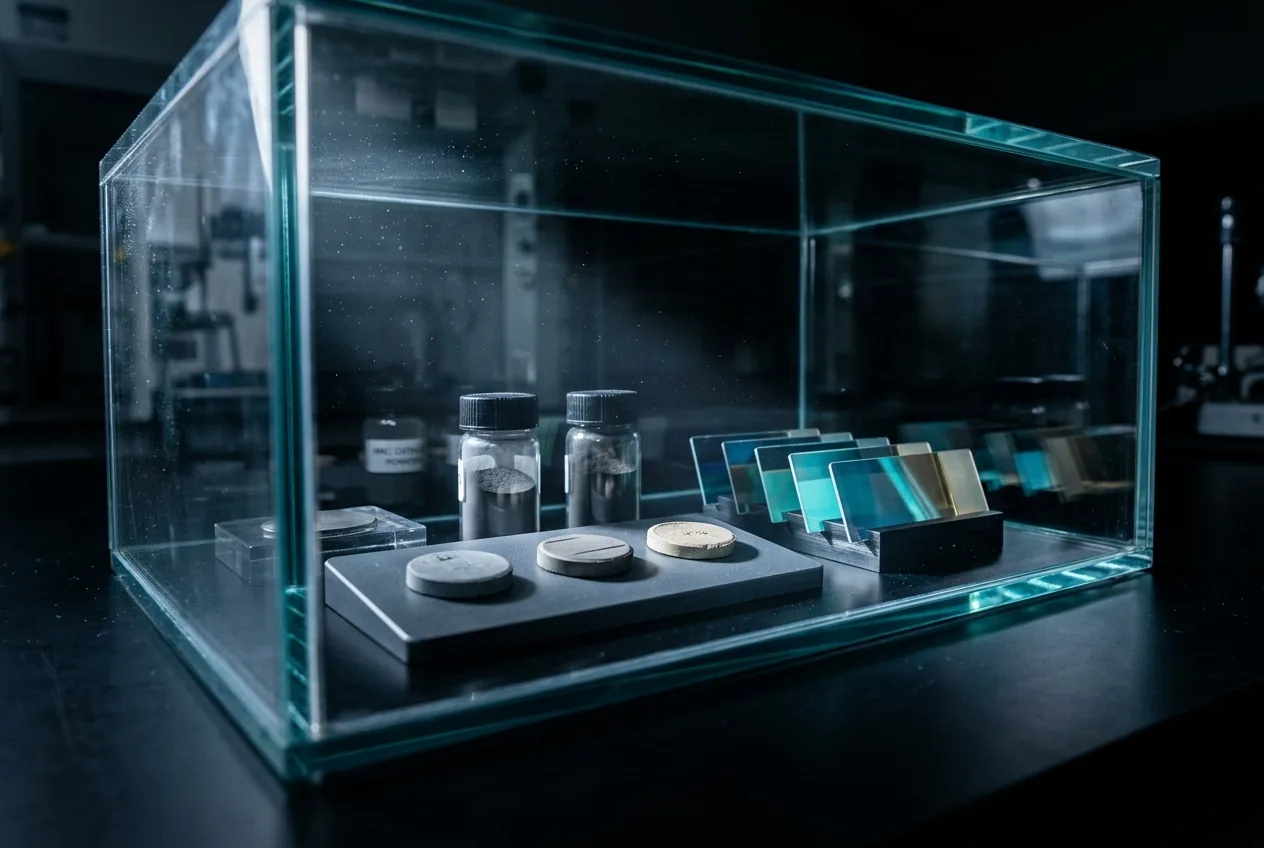
What synthesis makes of the ore. No object is displayed without the measurement that proves its property.
Cathode and thermoelectric powders and pellets
Sodium-ion layered oxides, skutterudites, tetrahedrites, thermoelectric oxides: each batch comes with its X-ray diffractogram and its temperature-dependent transport curves.
Thin films under a sealed case
Transparent conducting oxides, organic semiconductors, perovskite cells. Beside each fresh sample, a control aged under tropical conditions shows the real degradation.
Dielectric ceramics and ZnO varistors
Parts sintered from the clays and kaolins shown in section 1, with their temperature-dependent permittivity curves and non-linear current–voltage characteristics.
Activated carbon and biochar from agricultural residues
Produced by pyrolysis of the husks and hulls shown in section 1, with measured specific surface area and mass conversion yield.
03
Physics demonstrators in operation
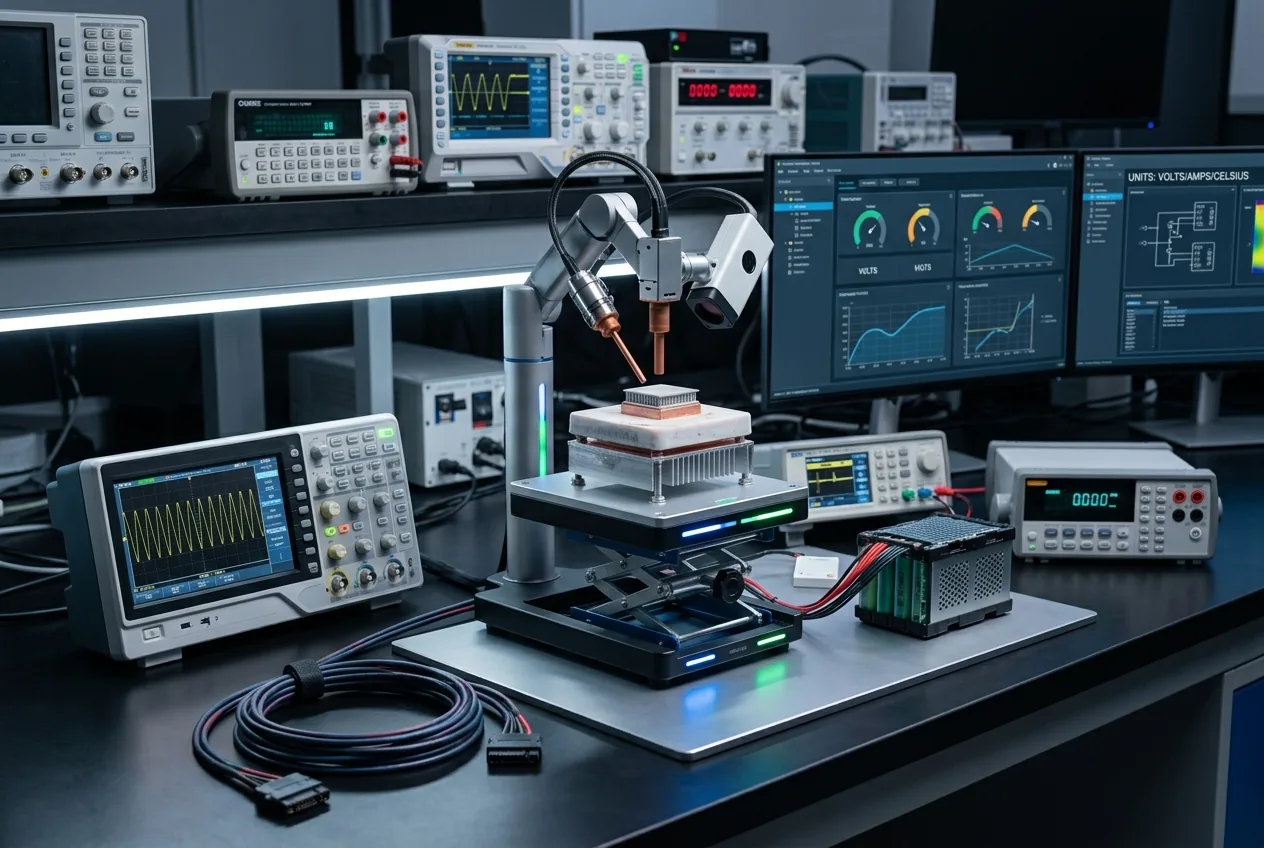
Devices running in front of the visitor, each attached to an active research area.
Local solar cell under a calibrated lamp
LiveI–V curve traced in real time, displayed side by side with that of an imported module under identical illumination.
Sodium-ion or flow battery assembled on site
LivePowers a visible load; state of charge, voltage and accumulated cycle count are displayed continuously.
Thermoelectric module on a hot plate
LiveMeasurable voltage and power as a function of temperature difference, with the effective efficiency set against the Carnot limit.
Discharge generator and surge arrester
LiveSpark gap or Tesla coil showing clamping by a ZnO varistor: the same physics that protects a distribution line in a thunderstorm.
Low-head hydro turbine on a closed water loop
LiveInstantaneous flow, head and electrical power; the efficiency curve builds up as the visitor varies the flow rate.
Transparent bench-top gasifier
LiveThe fixed bed, the pyrolysis front and the syngas flame are visible; gas composition is displayed continuously.
04
Tropical reliability: the teaching graveyard
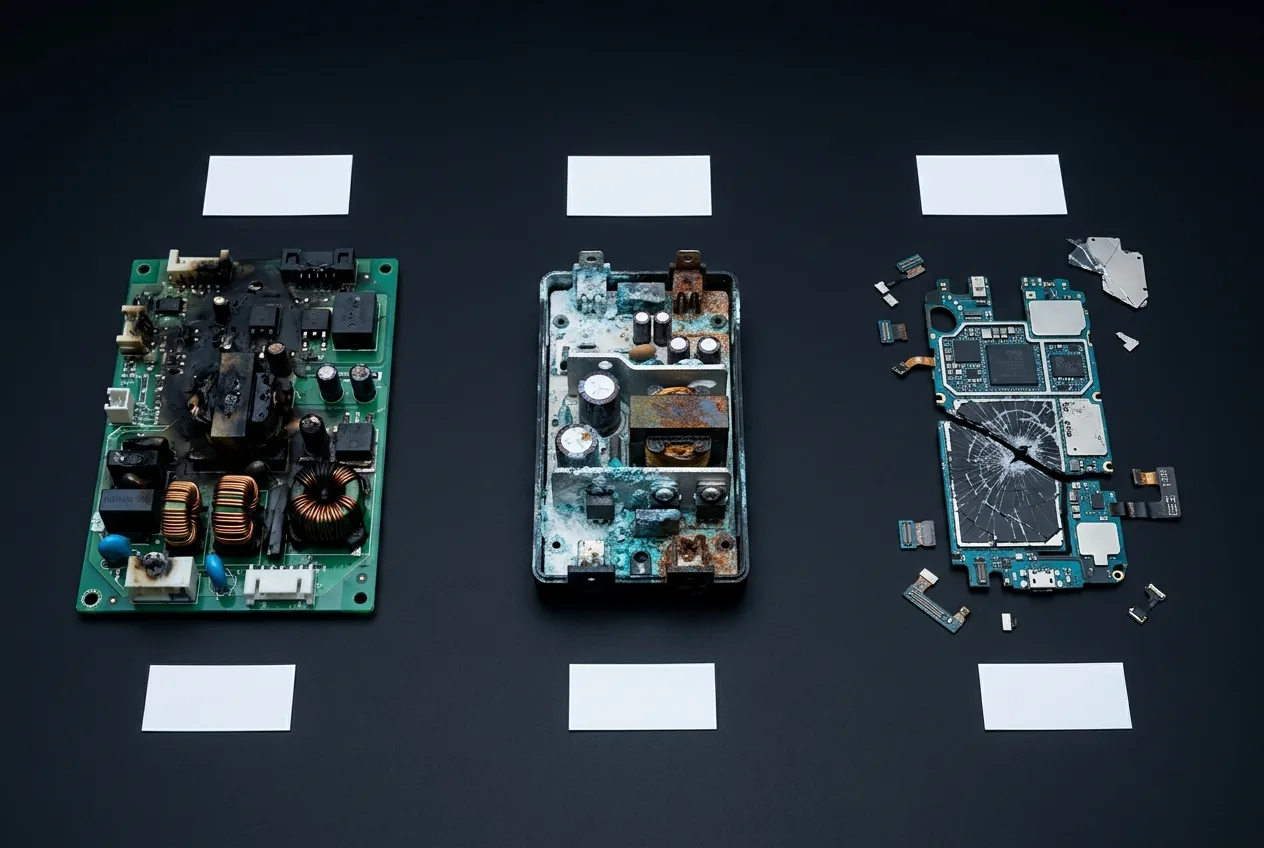
Every failed object comes with the physical mechanism that put it out of service.
Failed components and boards collected in service
LiveInverters, chargers, phone boards, medical equipment. Each item carries its failure analysis: electrochemical corrosion, electromigration, solder fatigue, lightning surge.
SEM micrographs of the defects
Displayed at eye level next to the object they come from: electrolytic migration dendrite, joint crack, electromigration void.
Visible climatic chamber
LiveBoards undergoing accelerated ageing behind a window, with the running temperature–humidity cycle profile and cumulative test time.
05
Metrology and instruments
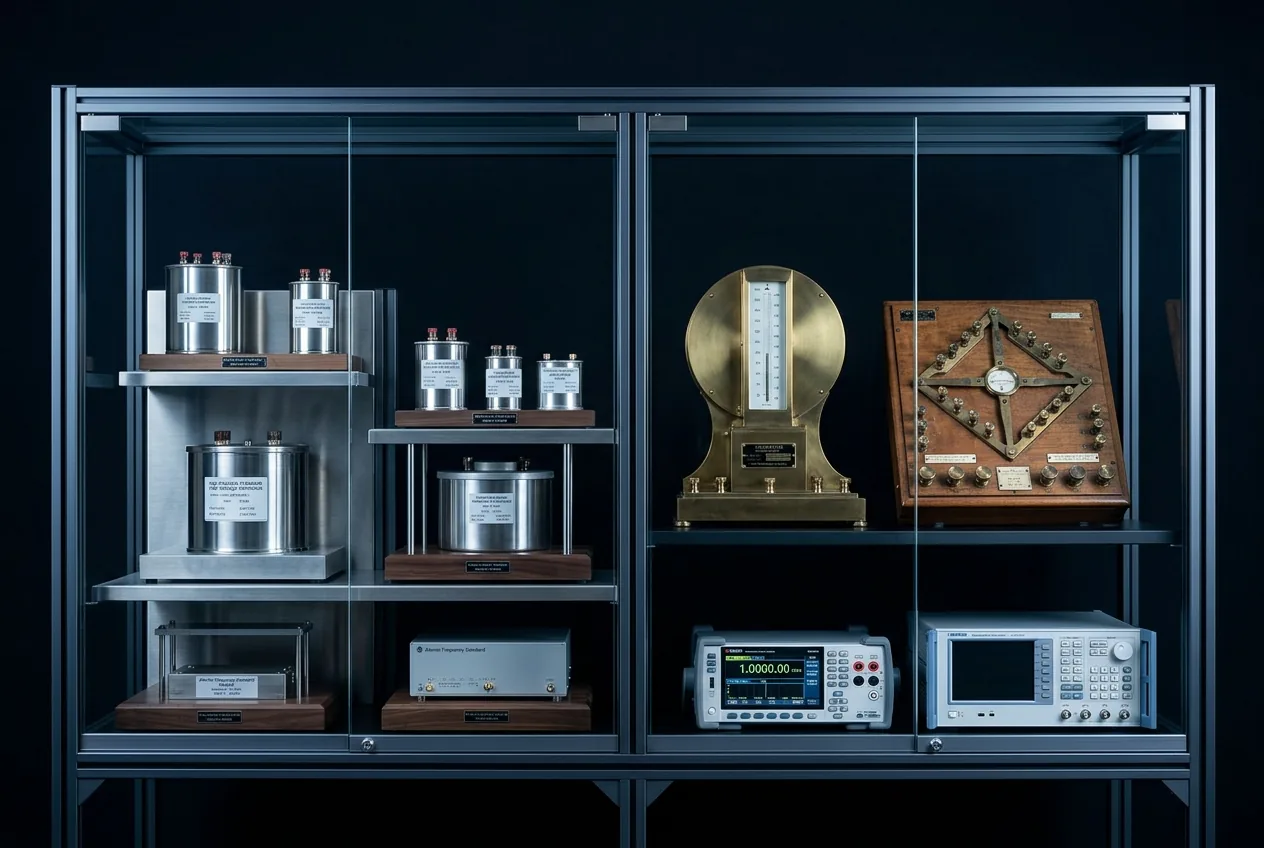
Without traceability, none of the measurements displayed in the previous sections carries any enforceable weight. This section shows where confidence comes from.
Secondary standards under glass
Voltage, resistance, temperature, mass, displayed with their traceability certificates and the calibration chain linking them to the International System of Units.
Historical instruments and their modern equivalents
LiveGalvanometer, Wheatstone bridge, spectroscope, set against their digital successors: the measurement method has not changed, only the resolution has.
Measurement station usable by visitors
LiveFour-point-probe measurement on a sample of the visitor's choice and a solar radiation sensor reading, with the uncertainty shown on every value.
06
Results and models
What theory and computation produce, presented as objects rather than as bibliographic references.
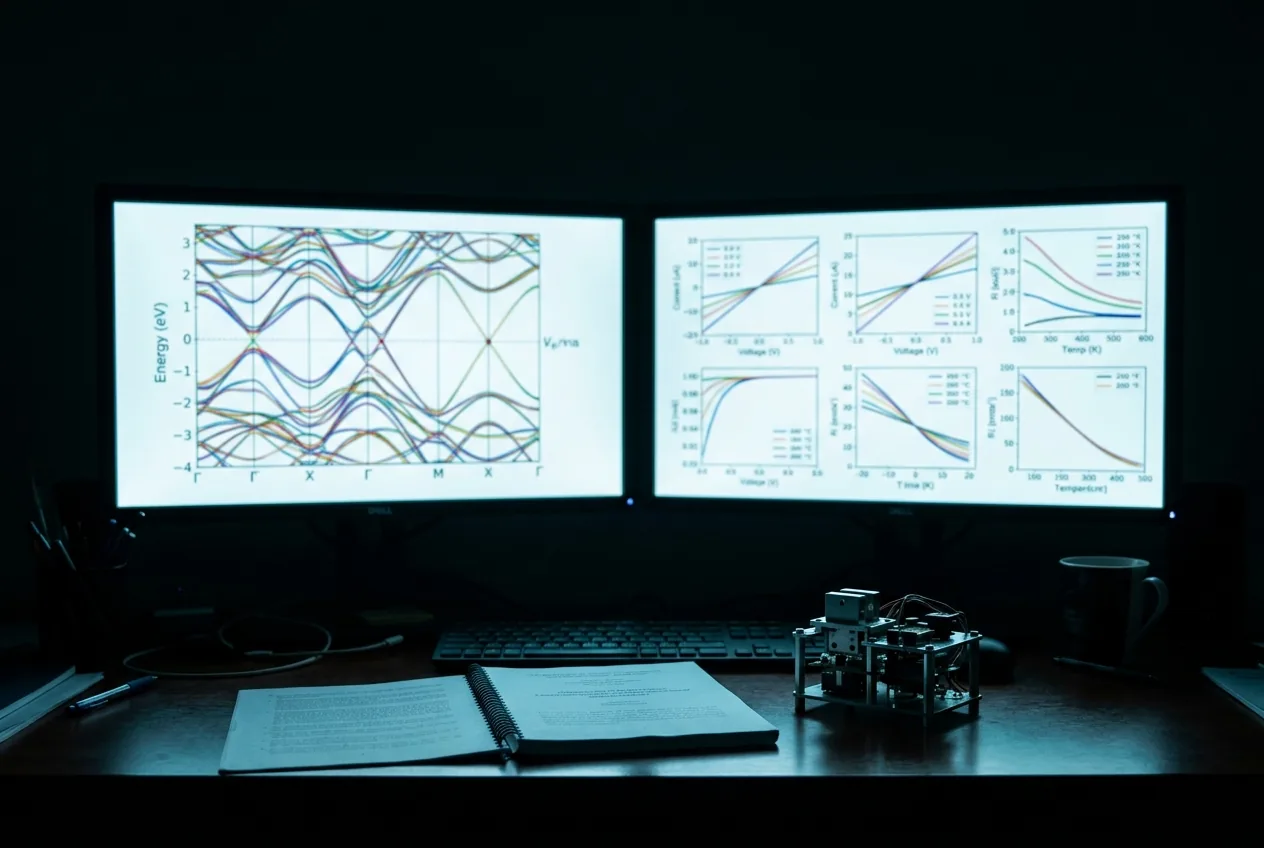
Live simulation screens
LiveBand structure of a material derived from an ore shown in section 1, charge transport at an interface, hydrological regime of a mini-hydro site.
Papers, patents and standards as objects
A humid-tropical qualification standard, printed and bound, placed beside the test bench that produced it.
Industrial prototypes from partnerships
Shown with the partner's name and the development stage reached, from laboratory bench to pre-production.
07
History and people
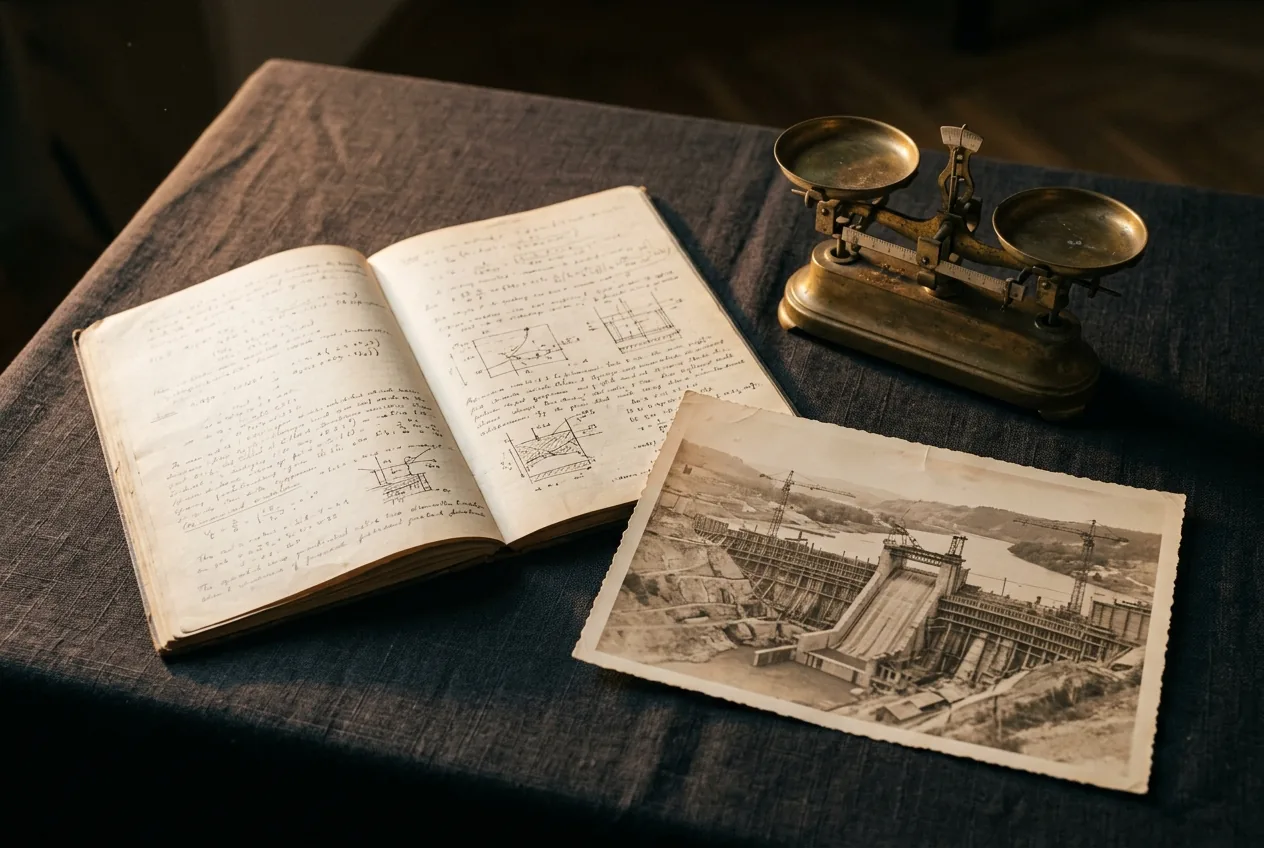
Physics is transmitted by people and by dated industrial decisions. This section anchors the academy in both.
Portraits and work of the physicists our areas depend on
The authors of the results our twelve areas rest on, presented through their scientific contribution rather than their biography.
Timeline of electrification
From the first hydroelectric schemes to today's grids; opposite each milestone, the physics questions it left open.
- No object without a displayed measurement
- A sample with no curve and no number is decoration. Every exhibit carries the measurement that proves its claim.
- At least a third of the collection running
- Hands-on and running exhibits are what distinguishes a showroom from a museum. The proportion is enforced at selection.
- Every exhibit attached to a research area
- And, where one exists, to the named industrial partner that uses it. An exhibit no one claims leaves the collection.
- Half-yearly rotation
- Part of the collection changes every six months, so that returning visitors (ministries, funders, industry) see progress rather than the same display case.