Area 12
Building materials and building thermal physics
Air conditioning is the largest tertiary-sector electricity load. Phase-change materials, bio-based insulation, coupled transfers.
Context
Reducing the cooling load is the most cost-effective energy efficiency measure in the tertiary sector, and it is decided entirely in the physics of the envelope: conductivity, inertia, coupled heat and moisture transfer.
Yet the available hygrothermal models and passive solutions were developed for temperate or hot-dry climates. In a hot, humid climate with low diurnal temperature swing, several founding assumptions collapse.
Open questions
What the literature does not settle
Phase-change materials: what melting temperature and enthalpy are optimal when the diurnal temperature swing is small? Does latent storage retain any value outside desert climates?
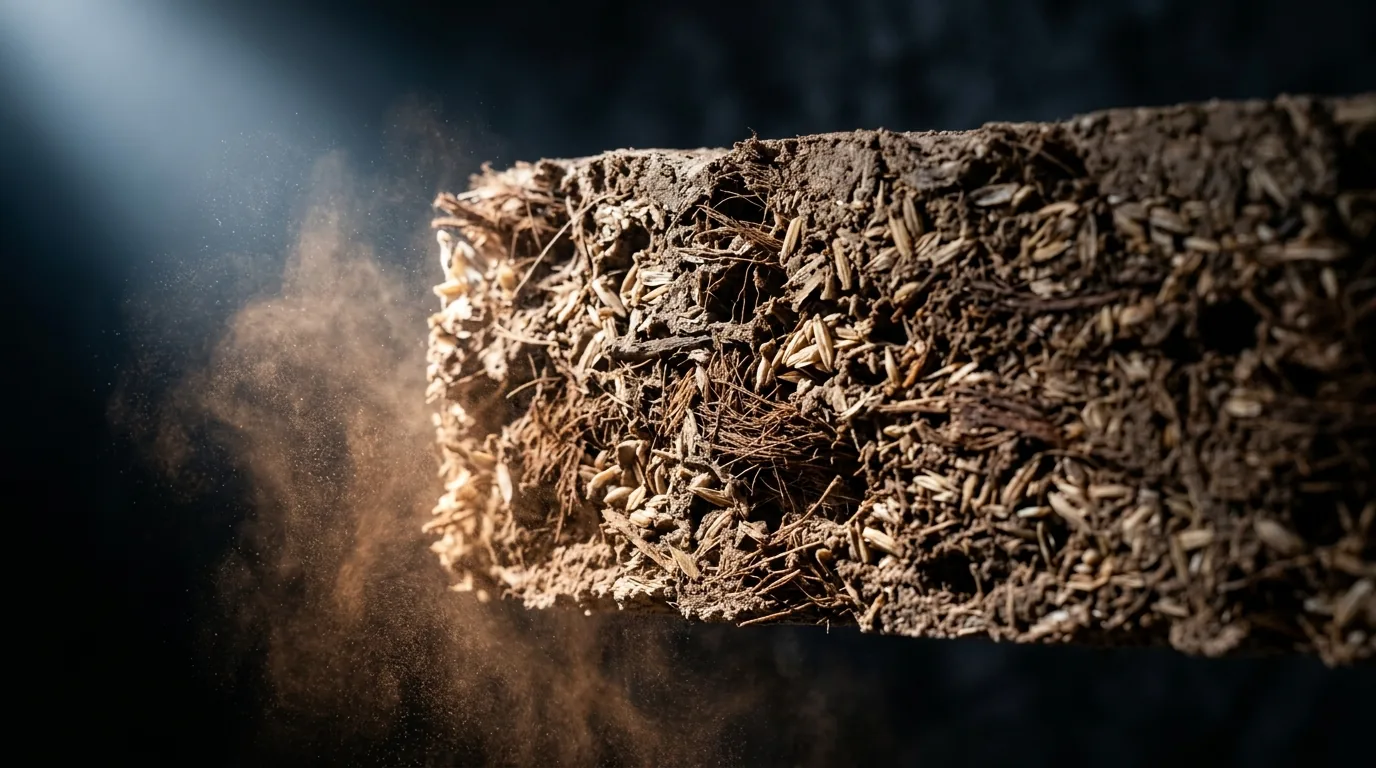
Bio-based insulation (coconut fibre, rice husk, earth–fibre composites): how do thermal conductivity and diffusivity vary with moisture content, and are these properties stable under sustained high humidity?
Coupled heat–moisture transfer in massive earth walls: are hygrothermal models calibrated in temperate climates transposable, and where do they fail?
Physics of comfort in humid conditions: what quantitative relation between operative temperature, humidity, air velocity and actual cooling load?
Passive radiative cooling coatings: what net gain under an equatorial overcast sky, where the atmospheric window is partly closed by water vapour?
Feasibility
Guarded hot plate, hot box, hot-wire conductivity meter, instrumented test cells: the equipment is largely built on site.
Methods and facilities
- Thermal conductivity and diffusivity measurement versus moisture content
- Instrumented test cells under real conditions and calibrated hot box
- Calorimetry of phase-change materials
- Hygrothermal simulation of walls and buildings
- Spectral emissivity measurement and radiative balance under overcast skies
Target outcome
Reference thermophysical data for bio-based and raw-earth building materials and passive design rules that cut the tertiary sector's largest electrical load.
Simulated production chain
Production of bio-based insulation and phase-change materialsFrom the manufacturing process to the costed cooling savings on a real building.Related areas

Materials physics for biomass and combustion
Pyrolysis and gasification kinetics of cocoa and palm residues, heat transfer in fixed beds, catalysts.
Read more
Electronic materials from abundant resources
Indium-free transparent conducting oxides, iron-based soft magnetic materials, dielectric ceramics.
Read more
Computational physics
DFT, molecular dynamics, multiphysics simulation: electronic structure, phonon transport and point defects.
Read more